
To lead is not just to advance oneself but also to advance the health and well-being of societies globally.
In the journey toward gender parity, Kenya’s healthcare sector stands at a critical crossroads. Historical underrepresentation of women in leadership positions within healthcare is a challenge that mirrors global issues, yet Kenya’s unique sociocultural landscape adds layers of complexity and opportunity.
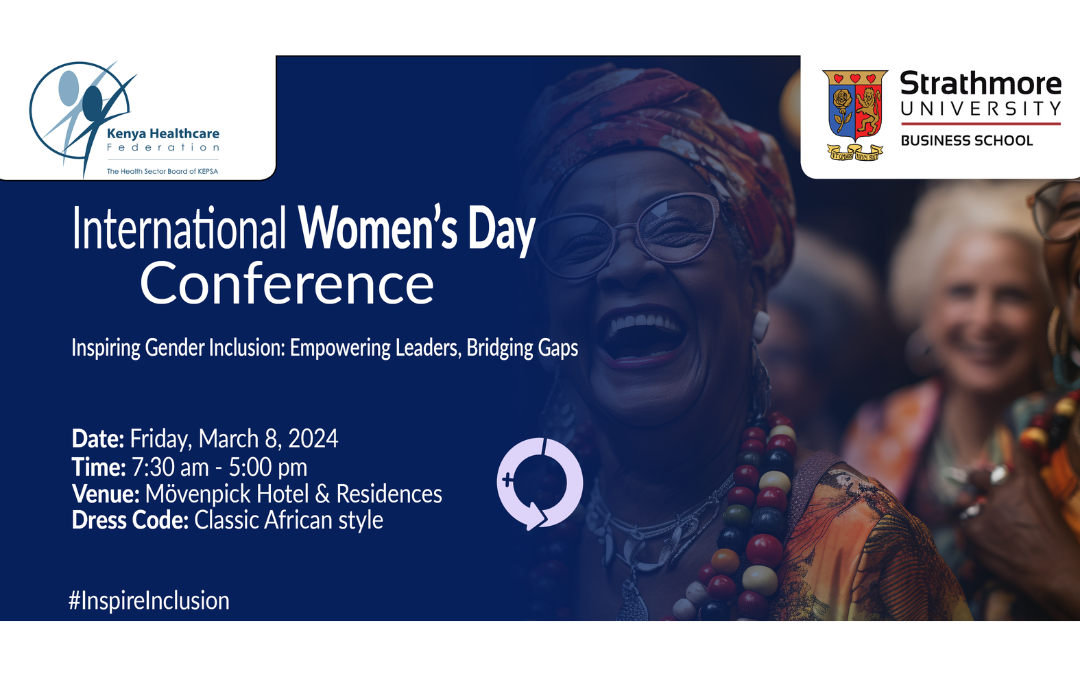
On March 8th, 2024, Bosivs was excited to join the Kenya Healthcare Federation and Strathmore University Business School (SBS) for the International Women’s Day Conference in recognizing women leaders in healthcare. It was a pivotal moment, poised to look into the complexities of women’s leadership in one of Kenya’s most critical sectors: healthcare. The launch of the Women in Health Leadership Report sheds light on the intricate dynamics of women’s leadership as they navigate the organizational maze within the Kenyan healthcare landscape.
The event brought together thought leaders, policymakers, and stakeholders to unravel the complexities surrounding women’s career advancement in the health sector. Esteemed speakers and panelists shared the intricacies of women’s leadership in healthcare and beyond, shedding light on both the progress made and the challenges that persist. Dr. Caesar Mwangi, Executive Dean of Strathmore University Business School, Dr. Kanyenje Gakombe, Chairman of Kenya Health Federation, and Ida Norheim Hagtun, Senior Program Officer at the Bill & Melinda Gates Foundation welcomed attendees with inspiring remarks, setting the tone for the day ahead.
The conference agenda featured engaging panel discussions and breakout sessions focused on various aspects of gender inclusion and leadership in the healthcare sector. Panelists such as Dr. Norah Obudho (East Africa Director, Women Lift Health), Stephanie Koczela (CEO, Penda Health), Roselyn Mungai (CECM Health, Nakuru County), and Dr. Rose Wangechi (Gender champion, KEPSA | Managing Director and Dental Surgeon, Riverside Dental Suite) shared their experiences and perspectives on creating gender-inclusive organizations and building supportive workplace cultures.
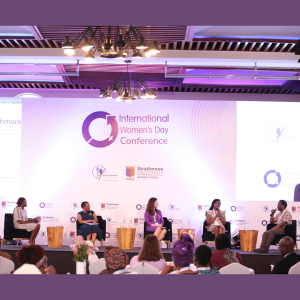
From left; Dr. Rose Wangechi (Gender champion, KEPSA | Managing Director and Dental Surgeon, Riverside Dental Suite), Roselyn Mungai (CECM Health, Nakuru County), Stephanie Koczela (CEO, Penda Health), Dr. Norah Obudho (East Africa Director, Women Lift Health) and Prof. Frank Wafula, Chairman, KHHRAC | Faculty, (SBS) as the Moderator
As we explore the strides being taken to empower female leaders, it’s essential to understand the multifaceted approach required to achieve gender parity in Kenyan healthcare leadership.
Driving Change Through Policy and Advocacy: The Kenyan Government, alongside non-governmental organizations, spearheads initiatives aimed at creating an equitable playing field, slowly reshaping the fabric of leadership, and ensuring women’s voices are heard and valued in decision-making processes.
Challenges on the Path to Equality: Women leaders frequently face discrimination and underestimation of their capabilities. To combat this, it’s crucial to build a culture of mentorship and support, where accomplished women leaders mentor younger professionals, creating a cascade of empowerment and inspiration across the sector.
Highlighting Successes and Role Models: Amplifying the achievements of women in healthcare leadership positions serves as a powerful tool for change. Leaders like Dr. Nakhumicha, S. Wafula, Cabinet Secretary, Ministry of Health, have become symbols of what is possible, inspiring a generation of female healthcare professionals to aspire to leadership roles.
In the vibrant fabric of Kenya’s healthcare sector, female leaders are emerging as pivotal figures. Their journeys, marked by resilience, innovation, and a deep commitment to improving public health, are beacons of inspiration for women across Africa and the globe. By pushing through the ‘glass ceiling,’ they’re redefining leadership in healthcare, and playing a crucial role in the transformation of the sector.
The Wall of Fame at the event featured stories underlining the significant strides made by notable female leaders in Kenyan healthcare. We spotlight these achievements, to honor their legacy, and encourage a future where healthcare leadership is diverse, inclusive, and reflective of the populations it serves. Some of these trailblazers include;
- Dr. Miriam Mutebi, MD, MSc, FACS First Female Breast Cancer Surgeon, and a leader in oncology, Served as the President of the Kenya Society of Hematology and Oncology (KESHO) she continues to inspire and drive progress in the fight against cancer, both locally and globally.
- Dr. Jacqueline Kitulu, MD. MBA, OGW, FCMA First Female President of KMA. Founding member of the Kenya Healthcare Federation, demonstrating exceptional leadership and dedication to advancing healthcare, leading transformative initiatives.
- Dr. Elizabeth Itotia, the first Kenyan Female Radiopharmaceutical Scientist, first Kenyan woman to qualify as a nuclear pharmacist, which is a field traditionally dominated by men. Her academic achievements highlight her dedication to advancing healthcare.
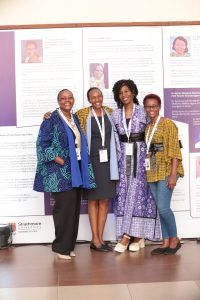
In Purple: Dr. Miriam Mutebi, MD, MSc, FACS, and colleagues.
As these leaders continue to inspire and pave the way, their legacy is in the impactful changes they bring about in the health sector, making them true architects of a better future.
One of the key highlights was the presentation of research findings by Dr. Ben Ngoye, Co-Principal Investigator | Faculty Strathmore Business School which provided valuable insights into the current landscape of women in health leadership roles. Despite notable progress, the phenomenon of the “Leaking Pipeline Syndrome” remains a significant challenge, emphasizing the importance of addressing barriers to women’s advancement in management positions.
The launch of the Women in Health Leadership Project Report marked a significant milestone in efforts to bridge the leadership gap in Kenya’s health sector.
The report, titled “Advancing Women’s Leadership in the Kenyan Health Sector through Organizational and Systems Change Efforts,” highlights the challenges and opportunities faced by women in healthcare leadership roles.
Are the rungs on the organizational ladder broken or is there no ladder at all?
Authored by esteemed scholars, researchers, and practitioners Dr. Angela Ndunge, PhD., Dr. Ben Ngoye, PhD, Dr. Elizabeth Muthuma, PhD, Dr. Benson Mutuku, PhD, Kennedy Lovi, Judith Amolo, MA, Duncan Agenga from Strathmore University Business School, Dr. Tim Theuri, BDS, Charity Kamau and Joan Nderu from the Kenya Healthcare Federation, offers a comprehensive analysis of the structural, cultural, and policy-related factors shaping women’s career advancement in healthcare organizations across Kenya. It paints a nuanced picture of the organizational, cultural, and systemic factors influencing women’s career trajectories in the field.
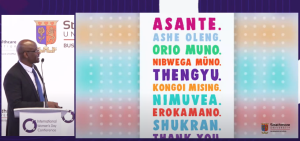
Dr. Ben Ngoye, Co-Principal Investigator | Faculty Strathmore Business School
One of the report’s key revelations is the stark underrepresentation of women in top-level leadership positions, despite them comprising the majority of the global health workforce. As highlighted by a study cited in the report, only 15.3% of health system CEOs and 15.8% of health insurance Company CEOs were women in 2021. Within Kenya’s health sector women occupy over 70% of mid-level positions, but only 42% of top-level leadership roles, indicating a significant leadership gap. This disparity underscores the need to dismantle barriers and create pathways for women to ascend the organizational ladder.
The report identifies several systemic challenges faced by women in healthcare leadership. From gender-biased workplace policies, entrenched gender stereotypes, and biased organizational cultures to opaque promotion processes and limited access to leadership opportunities, women encounter numerous barriers hindering their professional growth and advancement. However, amidst these challenges, there are glimmers of hope and opportunities for change, in the form of recommendations aimed at building a more inclusive and supportive environment for women in healthcare leadership.

From Left: Dr. Tim Theuri , Dr. Angela Ndunge, Ida Norheim Hagtun, Dr. Ben Ngoye and Dr. Elizabeth Wangia
Dr. Angela Ndunge, Dr. Tim Theuri, and Ida Norheim Hagtun led the unveiling of the report, emphasizing its role in driving awareness and advocating for gender equality and inclusivity. The Women in Health Leadership Report serves as a clarion call for collective efforts to nurture inclusive environments and empower women to assume leadership roles with confidence and competence.
The ladder exists but has missing rungs that need repair. The recommendations outlined in the report offer actionable steps for organizational leaders, policymakers, and stakeholders to champion gender diversity and inclusion in the healthcare sector. From promoting transparency in recruitment and promotion processes to investing in gender-inclusive leadership development programs, male colleagues are encouraged to mentor and sponsor women leaders and advocate for inclusive policies and practices. There is a myriad of strategies to bridge the leadership gap and unlock the full potential of women leaders in healthcare.
As the day drew to a close, session moderators reiterated the importance of collective action in advancing women’s leadership and issued a compelling call to action. Dr. Angela Ndunge encapsulated the essence of the conference; urging attendees to carry forward the momentum generated and continue championing gender inclusion in their respective spheres of influence.
The journey toward gender parity in healthcare leadership is fraught with challenges, but it is also filled with opportunities for transformation. By heeding the call to unravel the ladder of women’s leadership, we can bridge the gap between aspiration and achievement, ensuring that every woman has the opportunity to reach her full potential.

From Left: Eunice Ayuma (Executive Director at Bosi), Diana Mwarania (Quality Assurance Advisor at Fadhila Health), June Gachui (MC) and …
As the world commemorates International Women’s Day 2024 – #IWD2024 under the theme of #InspireInclusion, the Conference provided a platform for meaningful dialogue, networking, and knowledge sharing, reaffirming the commitment of organizations like Strathmore Business School and Kenya Healthcare Federation to promote women’s leadership and empowerment.
As we reflect on the insights gained and connections forged, let us stand together in solidarity, championing the cause of women’s leadership, let us remain steadfast in our resolve to inspire inclusion, empower leaders, and bridge the gaps that hinder progress toward gender equality in all spheres of society, including healthcare leadership. Let us seize this moment to inspire inclusion and drive lasting change for future generations.
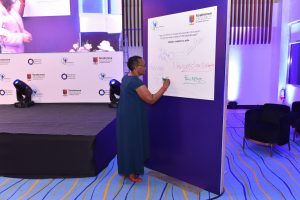
Roselyn Mungai (CECM Health, Nakuru County)